Have you ever wondered what Japanese people say when they leave home or return after a long day? In Japan, there are four common expressions used in everyday life when leaving home and returning.
These phrases are more than just simple greetings. They are a natural part of Japanese daily life and express a sense of connection, warmth, and care between people.
Let’s learn how to use them!
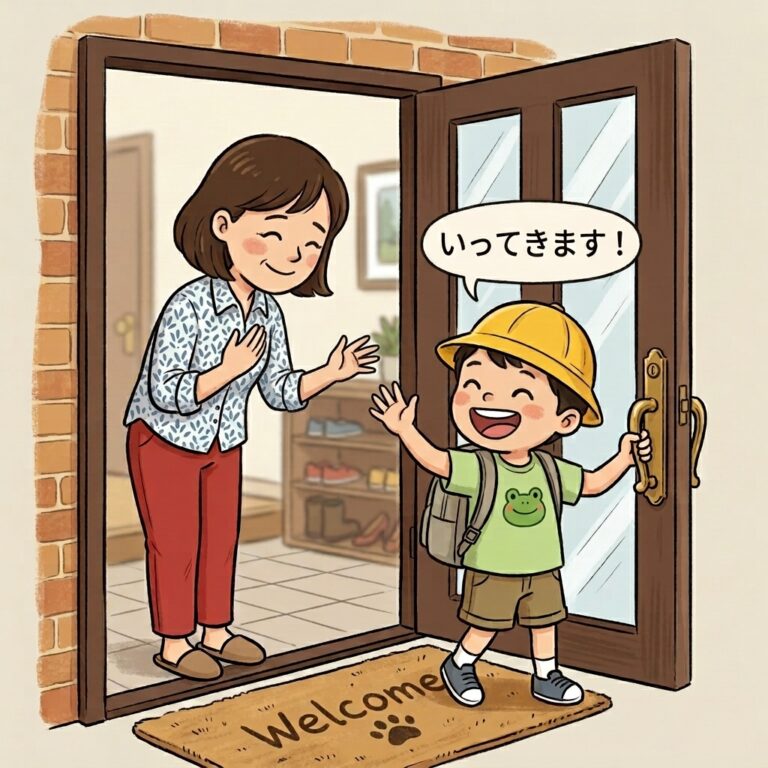
1. いってきます (Ittekimasu) – I’m off!
When you leave home, you say いってきます (Ittekimasu) to let the people around you know that you are going out.
It is similar to saying “I’m off!” or “I’m leaving now!” in English.
Example:
A: いってきます!(Ittekimasu!)
Meaning: I’m off! / I’m leaving now!
You can use this expression when leaving for school, work, or another destination.
It is commonly used with family members or other people who are at home.
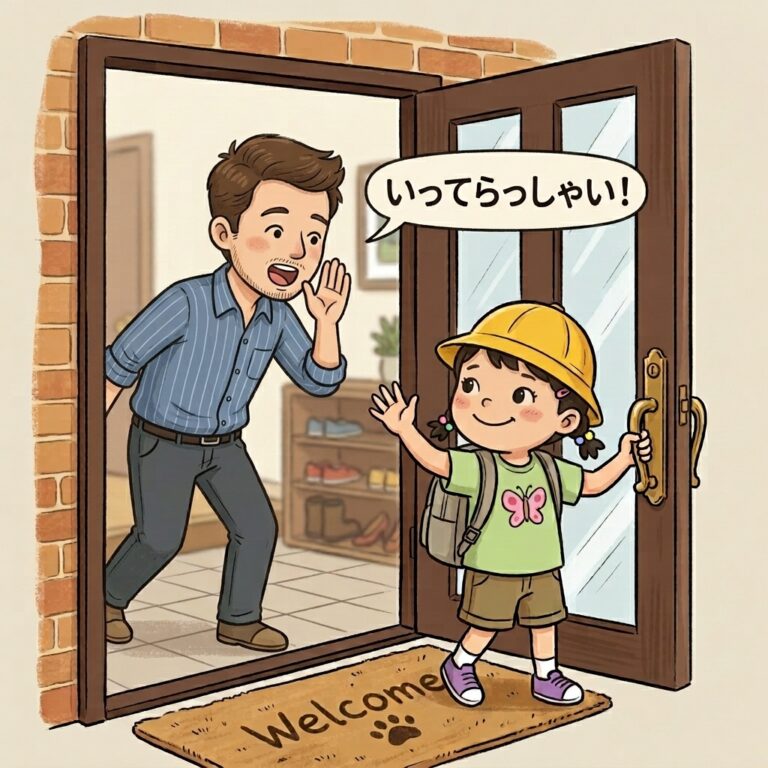
2. いってらっしゃい (Itterasshai) – Take care!
When someone says Ittekimasu, the natural response is いってらっしゃい (Itterasshai).
This expression is used to send someone off when they leave home. It conveys warmth and care, with a feeling similar to “Take care!” or “Have a good day!
Example:
A: いってきます!(Ittekimasu!)
B: いってらっしゃい!(Itterasshai!)
In English:
A: I’m off!
B: Take care! Have a good day!
Although Itterasshai is sometimes translated as “See you later,” its main purpose is to send someone off warmly, rather than simply say goodbye.
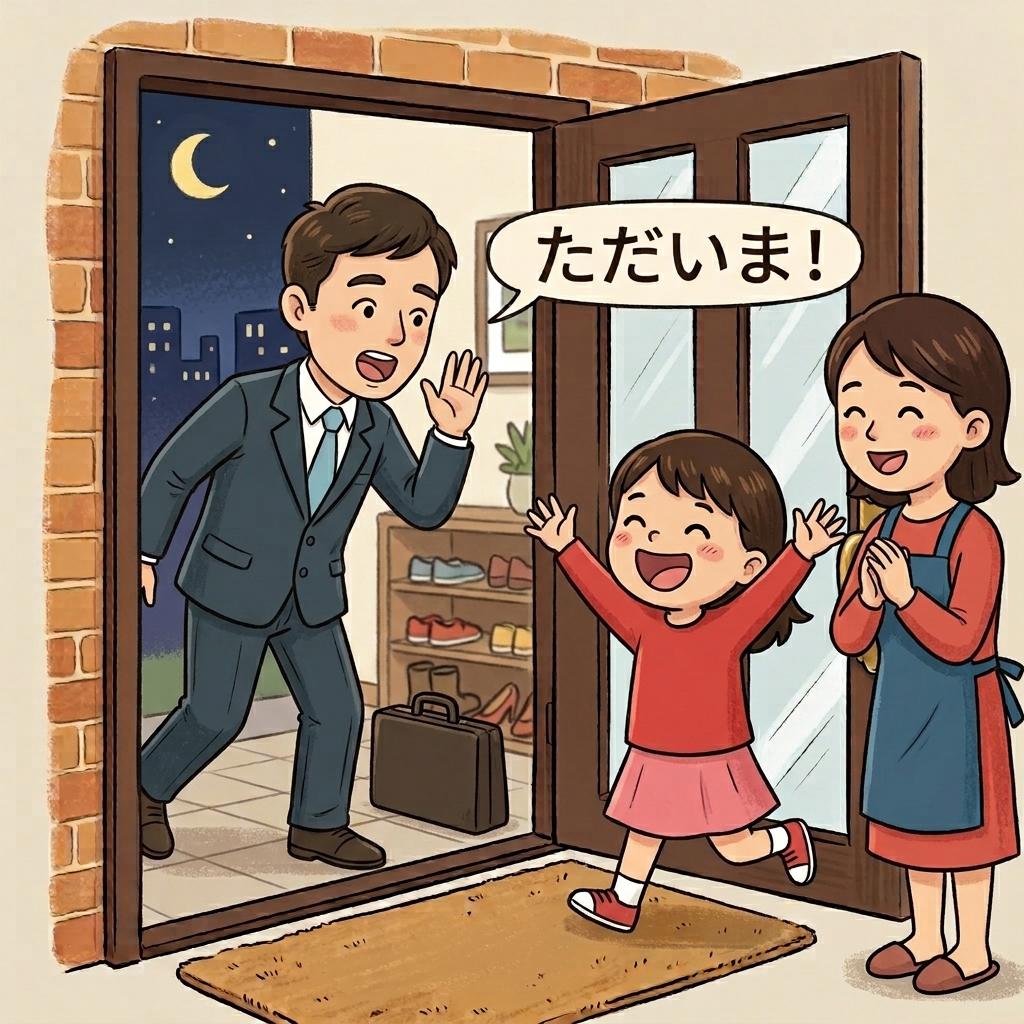
3. ただいま (Tadaima) – I’m home!
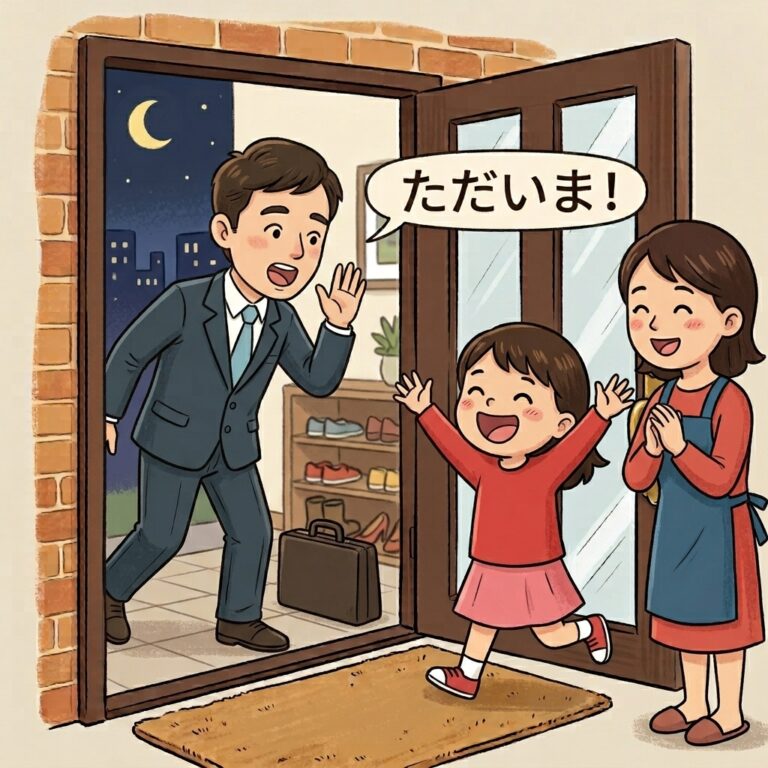
When you return home, you can say ただいま (Tadaima) to let the people around you know that you are back.
It is commonly translated as “I’m home!” or “I’m back!
Example:
A: ただいま!(Tadaima!)
Meaning: I’m home! / I’m back!
You can use this expression when you return from school, work, or an outing.
4. おかえりなさい (Okaerinasai) – Welcome home!
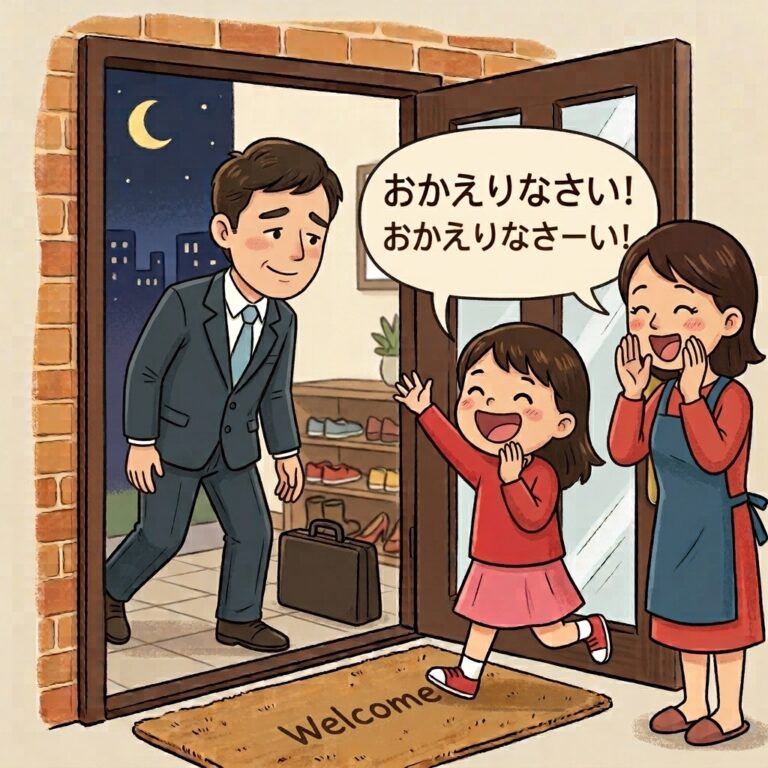
When someone comes home and says Tadaima, you can reply with おかえりなさい (Okaerinasai).
This expression means “Welcome home!” or “Welcome back!” It is a warm way to greet someone who has returned.
Example:
A: ただいま!(Tadaima!)
B: おかえりなさい!(Okaerinasai!)
In English:
A: I’m home!
B: Welcome home!
In casual conversations, you may also hear おかえり (Okaeri), a shorter and more informal version commonly used with family members and close friends.
Written by: Kwanjira Sensei (Japanese Language Instructor) at Thai Solutions.
9 October 2026
Ready to Start Your Japanese/Thai Language Journey?
Whether you are looking to navigate daily life in Bangkok with ease, connect deeper with local culture, or stay long-term with an Education Visa (ED Visa) / Destination Thailand Visa (DTV Visa) we are here to guide you every step of the way. Our communicative Thai courses are specially designed for expats, digital nomads, and international students who want practical, effective, and fun learning experiences both inside and outside the classroom.
Start your Japanese/Thai journey with us today!
- Contact us to learn more about our upcoming term dates and course packages.
- Inquire about our ED Visa / DTV Visa support for long-term stays in Thailand.